
Technical SEO Services in Gurugram
How We Find and Fix Hidden Website Errors
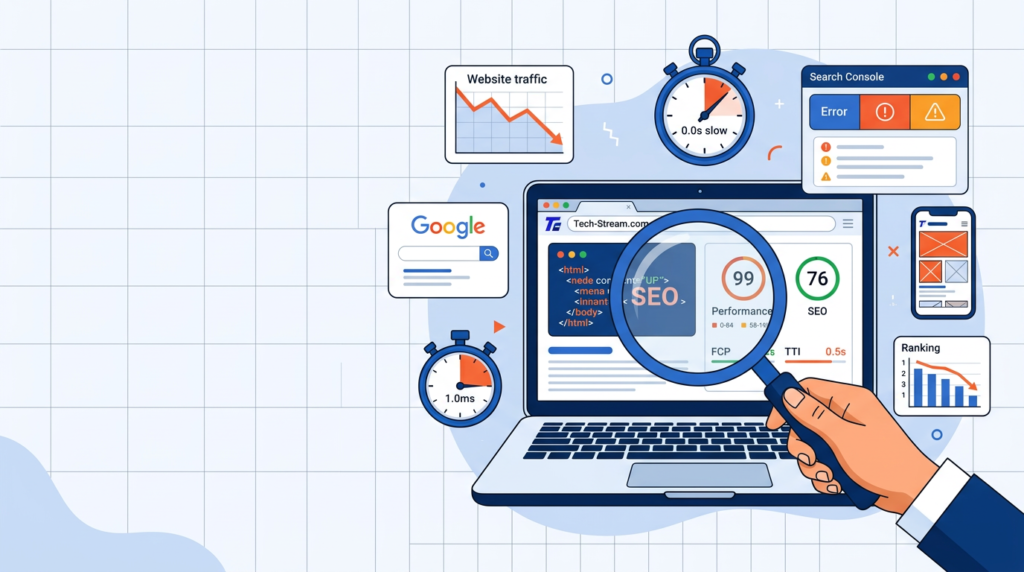
Technical SEO starts with a thorough technical audit, a deep check of how search engines crawl, index, and understand your website. It covers site speed, crawl errors, indexing issues, site structure, mobile performance, and Core Web Vitals, so every hidden problem is found and fixed.
You need it because technical issues quietly hold rankings back. Even great content and strong backlinks can’t perform if your site is slow, hard to crawl, or poorly indexed. A solid technical foundation helps Google find, understand, and rank your pages.
At Digital Click Pilot, we deliver this without errors. Every audit is verified, every fix is tested before going live, and nothing is left to guesswork. The result is a fast, clean, error-free website that search engines can trust and your visitors enjoy using.
If you’d like, I can also add a short CTA line at the end or tweak the tone to be more sales-focused.
Why Your Website Needs a Technical SEO Audit
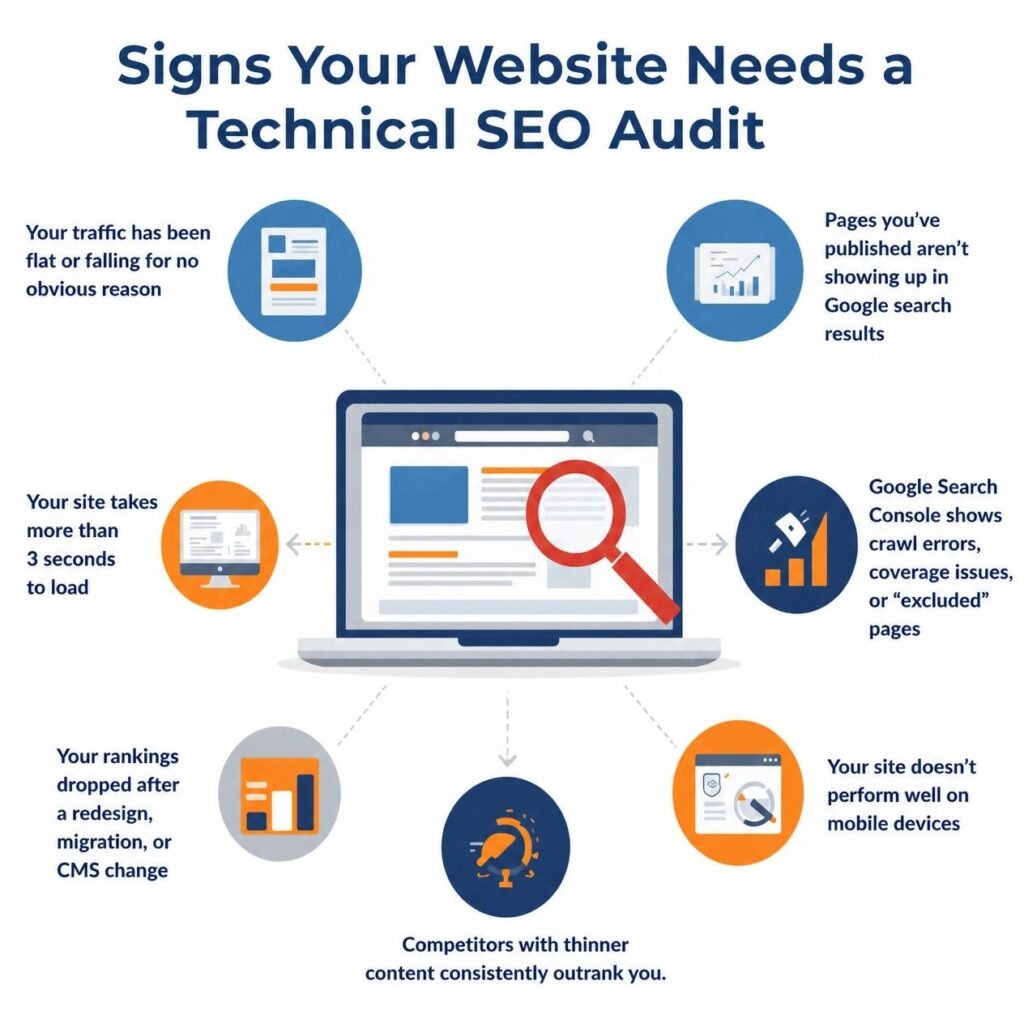
Even great content and strong backlinks can’t perform on a weak technical foundation. Your site likely needs an audit if:
- Your traffic is flat or falling for no clear reason
- Published pages aren’t showing up in Google
- Your pages take more than 3 seconds to load
- Google Search Console shows crawl errors or excluded pages
- Rankings dropped after a redesign, migration, or CMS change
- Your site performs poorly on mobile
- Competitors with thinner content outrank you
If any of this sounds familiar, there’s a good chance technical issues are holding your rankings back.
Our Technical SEO Services

Technical SEO Audit
A full diagnostic of your website's crawlability, indexing, speed, mobile experience, and structured data. You get a clear, prioritized list of what's broken and what to fix first, not a 100-page report you'll never read.

Crawlability & Indexing Fixes
We find out why search engines skip or misread your pages, such as wrong canonical tags, blocked resources, noindex mistakes, and redirect chains. Then we fix those signals so your important pages get indexed.
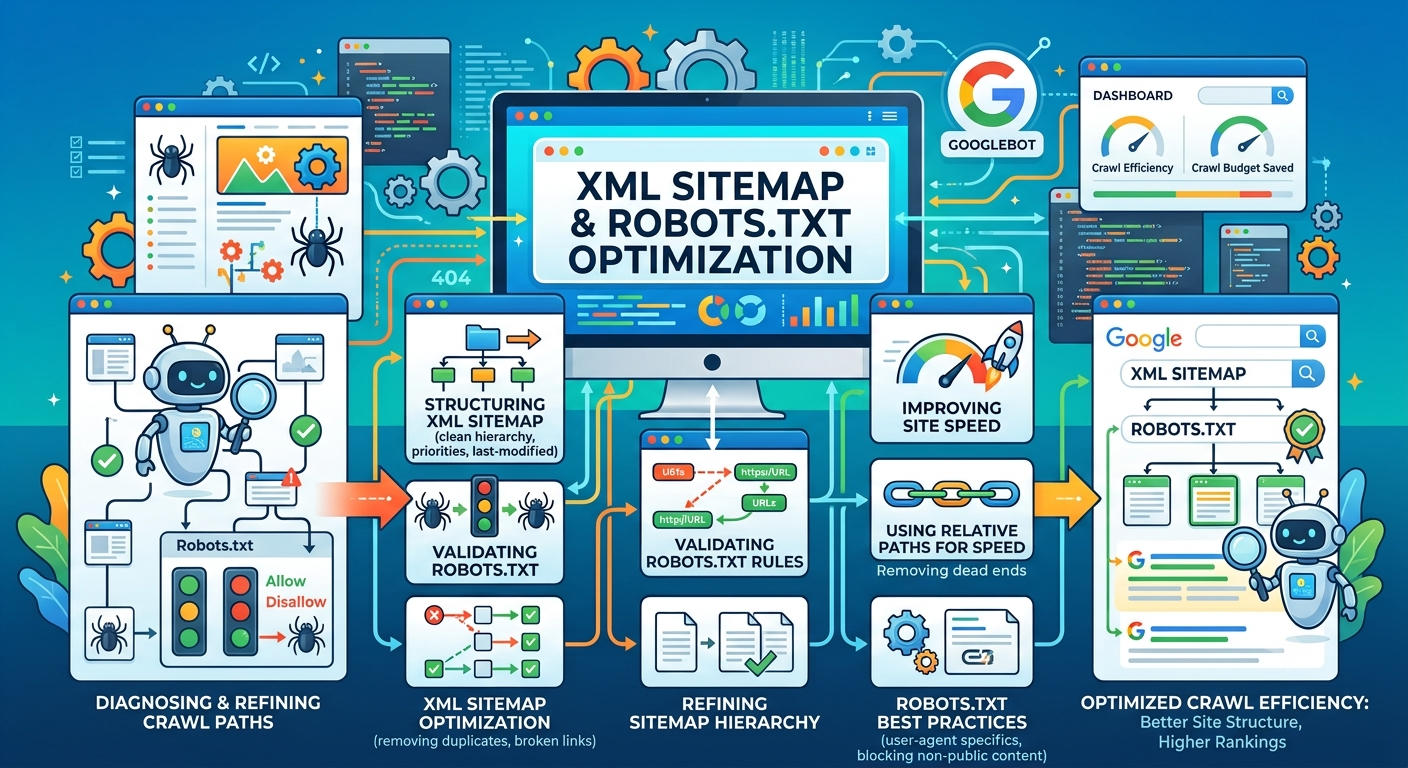
XML Sitemap & Robots.txt Optimization
A clean sitemap tells search engines which pages matter. A properly configured robots.txt stops them from wasting crawl budget on pages that don't. We set up both correctly and keep them updated as your site grows.

Site Architecture & Internal Linking
We organize your pages into a logical structure with clear internal links, so users and search engines can reach your most important content in just a few clicks, not buried five folders deep

Core Web Vitals & Page Speed Optimization
We find what's actually slowing your site down, like unoptimized images, render-blocking scripts, poor hosting, or bloated code. Then we fix it, targeting Google's Core Web Vitals (LCP, INP, CLS) directly.

Mobile View Optimization
Google indexes the mobile version of your site first, so we make sure your mobile experience is fast, responsive, and fully functional, not a scaled-down copy of the desktop version.

Structured Data & Schema Markup
We add schema markup (organization, local business, FAQ, service, review, and more) so search engines and AI tools can understand your business and represent it accurately in results.

HTTPS & Site Security
We make sure your site runs on a properly configured SSL certificate with no mixed-content warnings, protecting both user trust and your search rankings.

Canonicalization & Duplicate Content Cleanup
Duplicate or near-duplicate pages split your ranking potential. We consolidate signals with correct canonical tags so Google knows exactly which version of a page to rank.
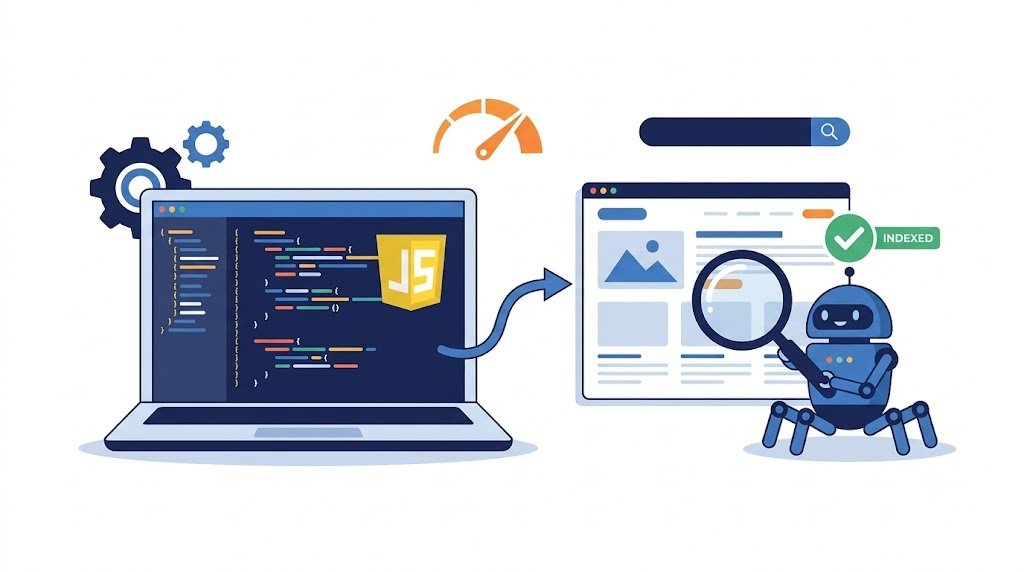
JavaScript SEO
For sites built on JavaScript-heavy frameworks, we make sure your content renders and gets indexed as intended, not skipped because a bot couldn't run your scripts.
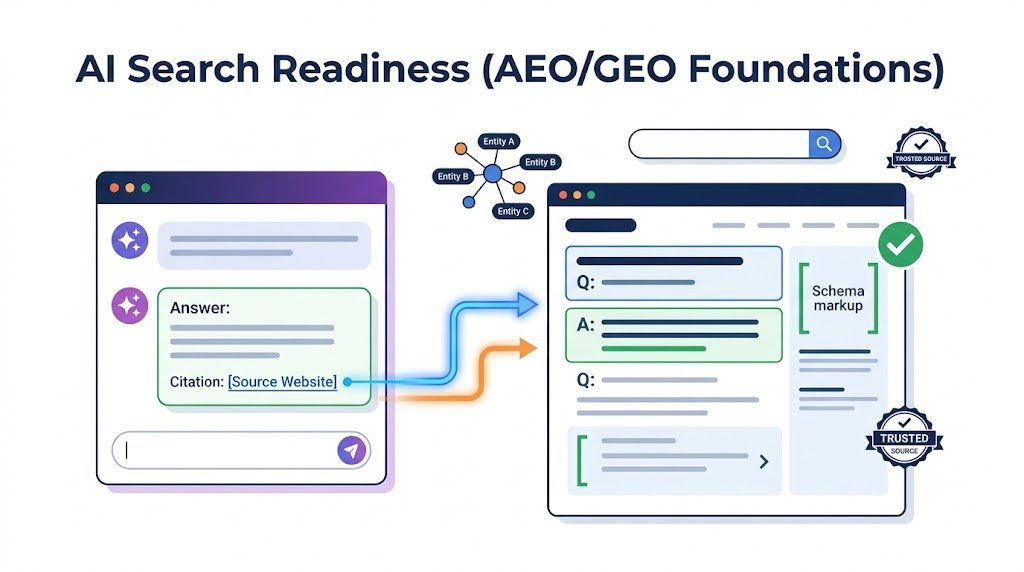
AI Search Readiness (AEO/GEO Foundations)
Technical SEO isn't just about Google anymore. We build the technical groundwork, including clean structured data, clear content hierarchy, and crawlable pages, that helps your business show up in AI answers on tools like ChatGPT, Claude, and Perplexity.
Our Technical SEO Audit Process
Website Audit & Diagnosis
We crawl your entire site using industry-standard tools and cross-check it against Google Search Console to find every crawl error, indexing gap, and structural issue.
Prioritized Fix List
Not every issue matters equally. We rank findings by ranking impact and effort, so you know exactly what to fix first for the fastest results.
Implementation
We fix the issues directly, or hand your developer a clear, step-by-step brief if you’d rather your own team make the changes
Speed & Core Web Vitals Pass
A dedicated performance pass targeting load time, LCP, INP, and CLS, since these directly affect both rankings and conversions.
Re-Crawl & Verification
Once fixes are live, we re-crawl the site and confirm in Search Console that errors are resolved and pages are being indexed correctly.
Ongoing Monitoring
Technical SEO isn’t a one-time job. Sites break during redesigns, plugin updates, and content pushes, so we monitor key technical health metrics to catch new issues early.
Why Businesses Trust Us to Fix Their Website Errors
- We find the cause behind every error. A Search Console warning usually points to a bad setting, a faulty template, or a plugin conflict. We fix it at the source so it doesn’t return after the next update.
- You always know what happened. Every report lists what we found, what we changed, and what difference it makes to your website.
- 8+ years of hands-on experience. We’ve worked on healthcare, HVAC, electrical, locksmith, construction, and wellness websites, so we know where to look first in each industry.
- You talk to the person doing the work. The person who audits your site answers your questions. There’s no account manager in between.
- Honest advice. If a fix depends on your developer or hosting company, we tell you exactly what to ask them for.
Ready to Find Out What's Holding Your Site Back?
Get a free technical SEO audit and see exactly what’s costing you rankings ,no obligation, no jargon, just a clear list of what to fix.
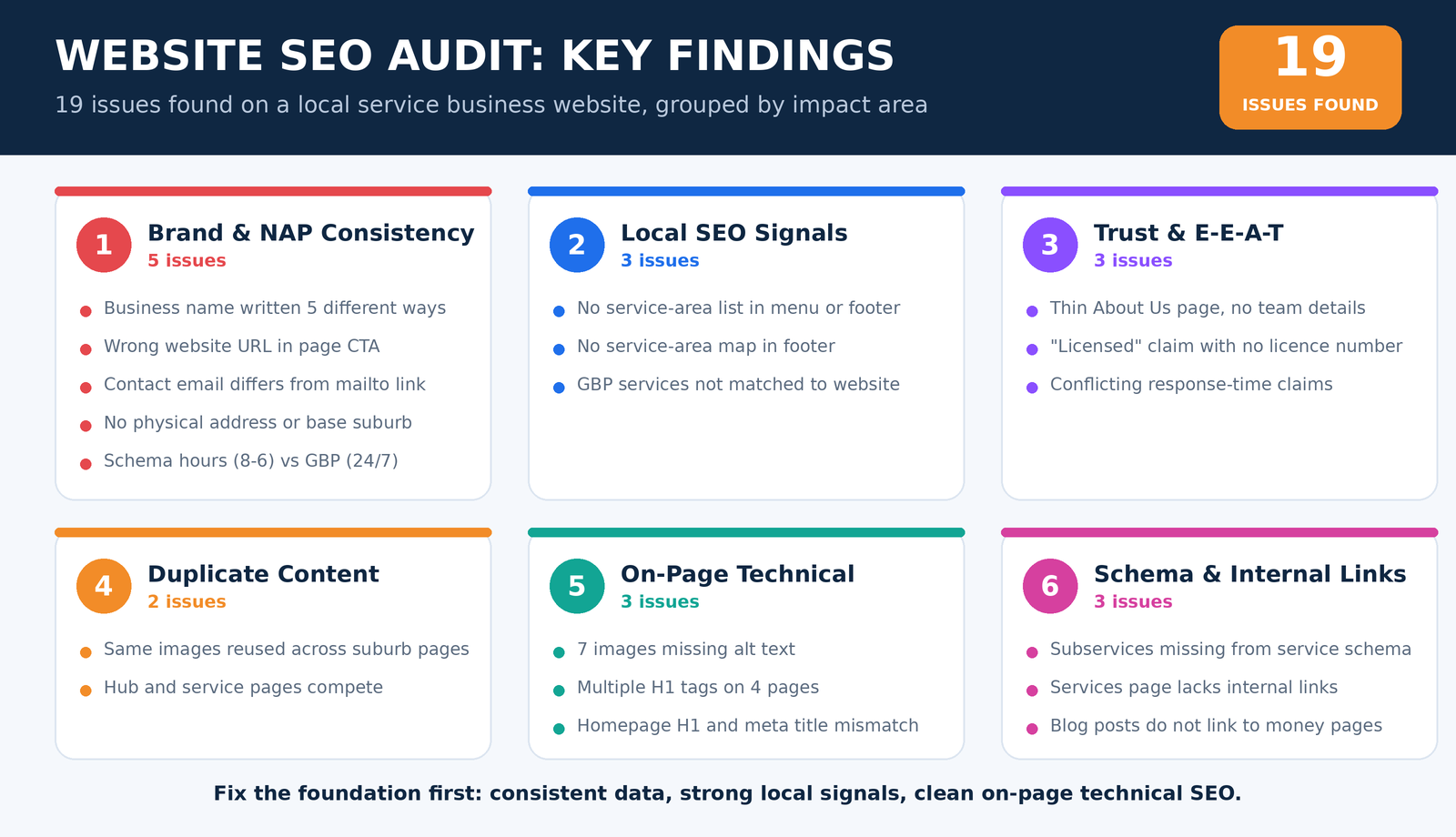
Technical SEO Audit
Fix What Matters First, Verified in Google Search Console
After Re-Crawl
Frequently asked questions
What is included in technical SEO?
Technical SEO covers everything that affects how search engines crawl, index, and understand your site. That includes a full technical audit, crawlability and indexing fixes, XML sitemap and robots.txt setup, site architecture and internal linking, Core Web Vitals and page speed, mobile-first optimization, structured data, HTTPS security, duplicate content cleanup, JavaScript SEO, and AI search readiness.
How much do technical SEO services cost?
The cost depends on your site’s size, platform, and the number of issues found. A small local business site needs far less work than a large site with thousands of pages. After a quick review of your website, we give you a clear, fixed quote with no hidden charges, so you know exactly what you’re paying for before we start.
How soon can I expect results from technical SEO?
Some fixes, like speed improvements and indexing corrections, can show results within a few weeks. Bigger ranking and traffic gains usually build over 2 to 4 months, as Google re-crawls your site and picks up the changes. Results depend on how serious the original issues were and how competitive your market is.
How do we measure the success of technical SEO?
We track clear, measurable signals: fewer crawl errors, more pages indexed in Google Search Console, better Core Web Vitals scores, faster load times, and growth in organic traffic and rankings. You get plain-language reports showing what changed and how it affects your business.
Can you fix technical SEO issues on any platform?
Yes. We work on WordPress, Shopify, Wix, Squarespace, Webflow, and custom-built sites. If a fix needs developer access, we either make the changes ourselves or give your developer a clear, step-by-step brief.
How often should a technical SEO audit be done?
We recommend a full audit at least once or twice a year, and again after any redesign, migration, CMS change, or major plugin update. For larger or fast-changing sites, ongoing monitoring catches new issues early, before they hurt your rankings.